
Home / Medical articles / Adult acne
Medical article · October 2026Adult acne: causes, everyday care and modern treatments in Athens
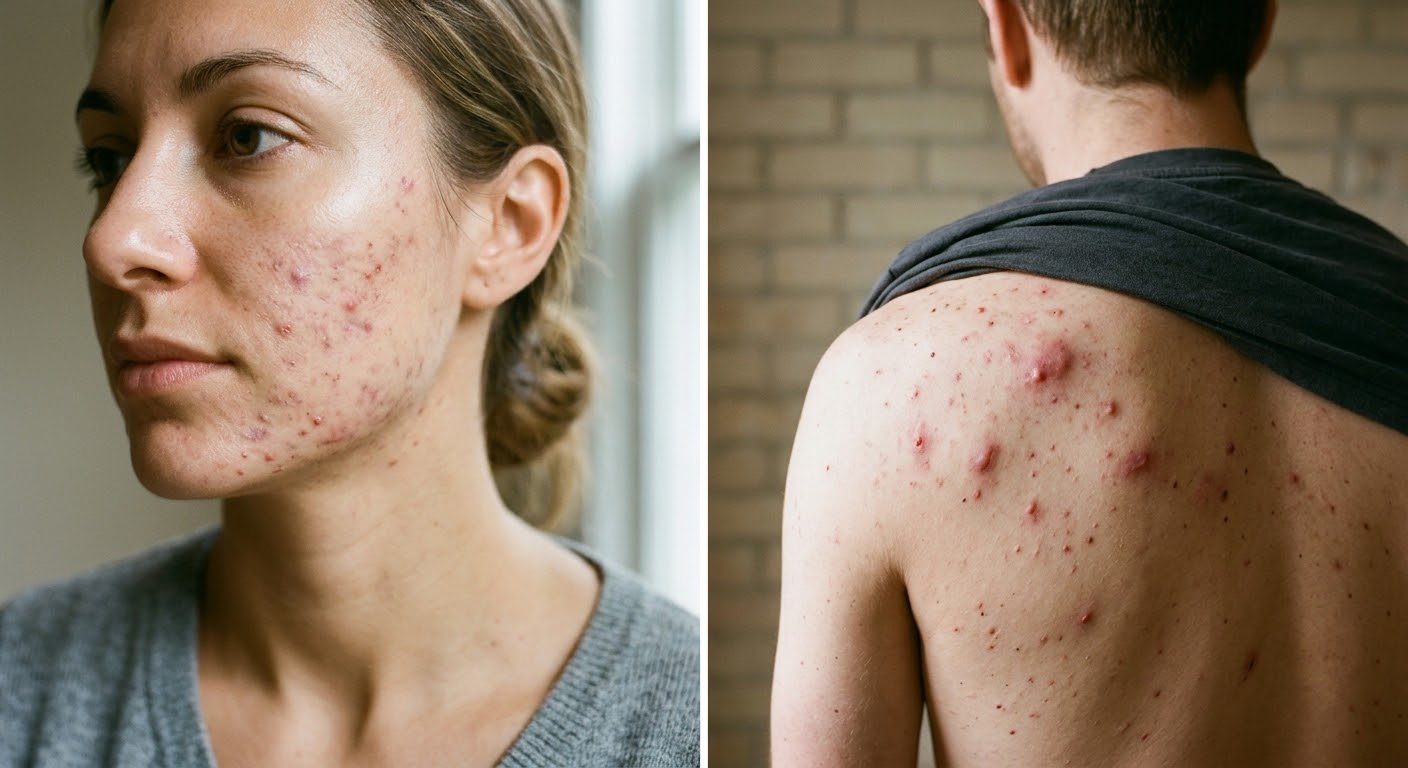
Acne is not only a teenage problem. It can persist into adult life or appear for the first time many years later. Blackheads, inflamed spots and deeper, painful lesions each need a different approach. The aim of treatment is not only to clear existing lesions, but also to prevent new flare-ups and scarring.
Why does acne appear in adulthood?
Acne involves blocked hair follicles, sebum production and inflammation. Hormonal changes, certain medicines and unsuitable skincare products can contribute to its onset or make it worse. It does not mean the skin is not being cleaned enough: vigorous scrubbing and harsh skincare are not a treatment.
Which treatments have a role?
Treatment is chosen according to the type and severity of the acne, how well the skin tolerates it and the medical history. It may include:
- Topical retinoids, to unblock pores and prevent new lesions.
- Benzoyl peroxide or azelaic acid.
- Antibiotics, when indicated, for a limited time and in suitable combinations to reduce the risk of antimicrobial resistance.
- Hormonal treatment in selected patients.
- Isotretinoin for severe acne or for cases that do not respond adequately to standard treatments, under medical supervision.
What helps day to day?
Gentle cleansing, moisturisers and sunscreens suitable for acne-prone skin, and not squeezing spots all support treatment. Constantly switching products often makes it hard to judge the result. Many topical treatments need several weeks of consistent use before a real improvement shows.
If there are deep, painful lesions or scars are starting to form, an early dermatological assessment is especially important. Treating active acne is the first step towards limiting its permanent marks.