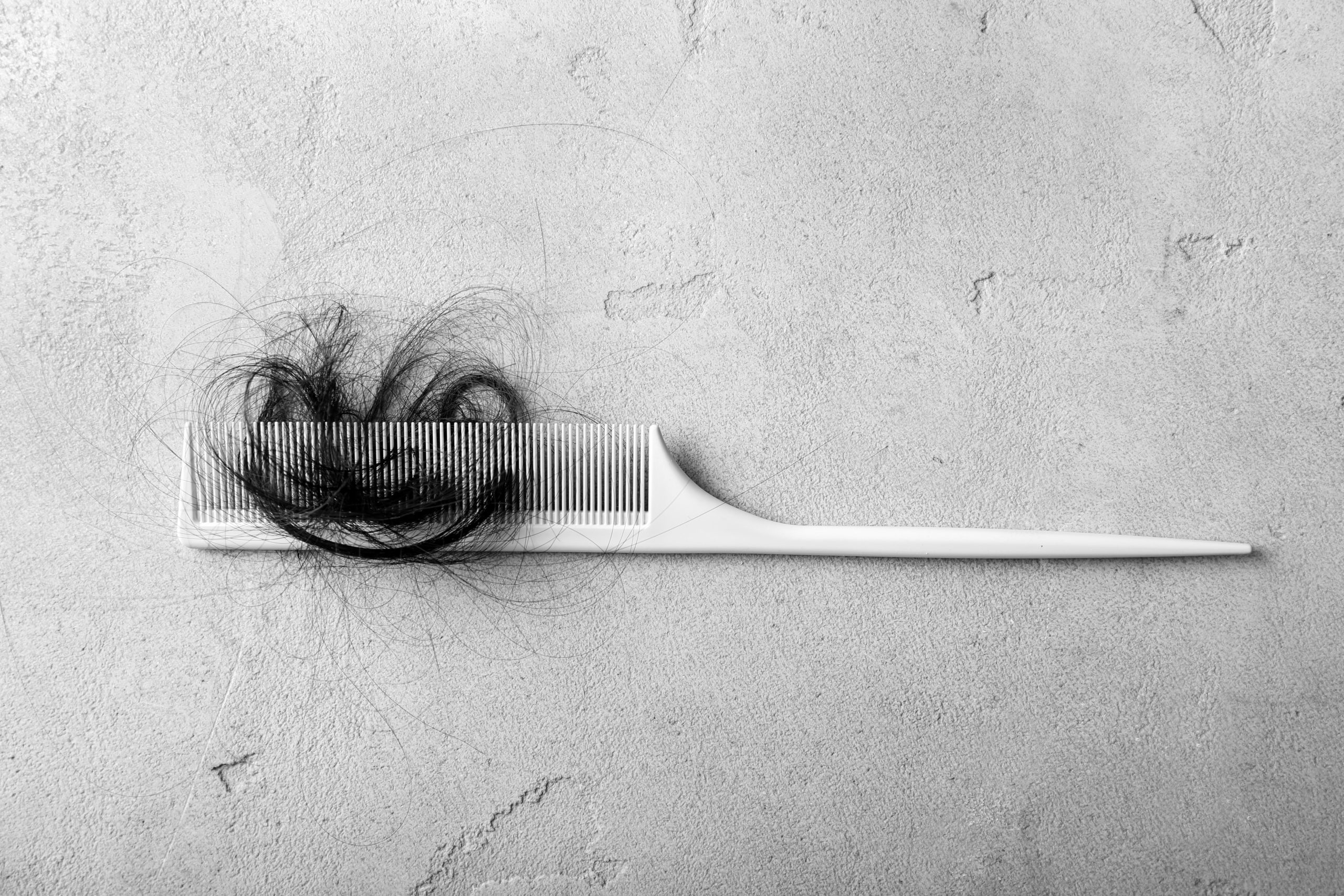
Hair loss and alopecia
Normally we lose 50–100 hairs a day. When more fall out and some do not grow back, this is abnormal hair loss — which can be investigated and treated.

There are about 100,000–150,000 hairs on the scalp. Each hair goes through three phases — anagen, catagen and telogen — during which it falls out and is replaced. Shedding is not constant and varies with the seasons.
Causes
In men and women, hair loss may be due to ageing, heredity, stress, hormonal changes, medication, skin conditions, infections, diets, chemical products, extreme conditions or air pollution.
Types of hair loss
Androgenetic alopecia. It occurs in men and women, usually between the ages of 20 and 50, with gradual thinning at the front hairline, the temples and the crown. It is more common and more pronounced in men and is mainly due to the effect of androgens on the hair follicles and to a genetic predisposition.
Alopecia areata. It causes smooth, hairless patches 1–5 centimetres in diameter on the scalp or on other parts of the body.
How we help
We carry out all the diagnostic and treatment steps to slow down hair loss and achieve a satisfactory result, for men and women.